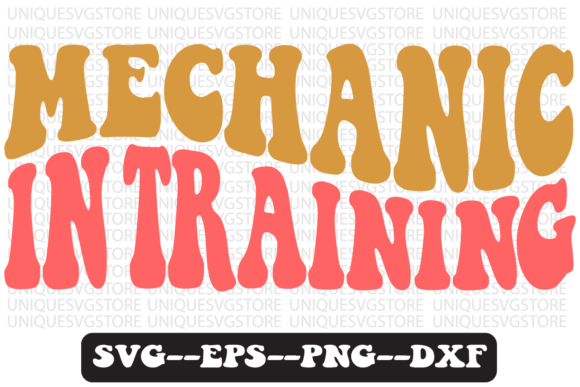
Mechanic in Training Retro SVG Design
First Impressions: A Nod to Nostalgia, Not Just Noise
When I opened Mechanic in Training Retro Svg Design, what struck me wasn’t just the bold font or vintage badge shape—it was the quiet confidence in its simplicity. This isn’t a cluttered, over-rendered graphic. It’s clean-lined, centered, and built around strong negative space—exactly what makes a design hold up across embroidery, sublimation, and print. As someone who’s stitched hundreds of quote-based designs for small shops and Etsy sellers, I immediately pictured it on a sturdy cotton twill apron or a midweight unisex sweatshirt. The retro styling feels authentic—not forced—and that matters when your customer is buying more than ink on fabric; they’re buying identity.
A Real-World Test: Embroidering It on a Canvas Tote Bag
Last week, I prepped a custom order for a local auto shop’s apprentice program: 25 embroidered canvas tote bags with Mechanic in Training Retro Svg Design centered on the front panel. Canvas is unforgiving—loose weave, minimal stretch, and prone to puckering if stitch density isn’t dialed in right. I used medium-weight cutaway stabilizer, 40-weight polyester thread (navy on cream), and ran a test on scrap first. The design held beautifully: the lettering stayed crisp, the outer border read as a confident satin stitch (not mushy), and the inner “in training” line didn’t vanish into fill. No digitizing tweaks were needed—rare for a ready-made SVG converted to embroidery. That tells me the original vector structure respects embroidery logic: no hairline gaps, consistent stroke weights, and intentional spacing between characters.
Where It Shines—and Where It Needs Caution
Mechanic in Training Retro Svg Design works best where clarity and character meet function:
- Custom apparel: Sweatshirts, crewnecks, and structured tees—especially for trade schools, garages, or DIY workshops.
- Embroidered patch: Its balanced proportions and defined edges make it ideal for sew-on or iron-on patches on jackets or tool belts.
- Baby embroidery: On onesies or burp cloths—but only with lightweight stabilizer and reduced density to avoid stiffness.
- Tote bag design and kitchen towel applications: The bold layout reads at arm’s length, even after repeated washing.
- Holiday embroidery or wedding gifts for gearheads: Paired with a subtle wrench icon or vintage oil can motif, it adds warmth without cliché.
But here’s where judgment matters: avoid using this as a machine embroidery design on highly textured fabrics like terry cloth or heavy fleece without testing stitch coverage. Also, skip curved surfaces like caps unless you’re using a cap frame and have confirmed the design fits within the front panel’s stitchable zone. Tiny lettering—like “in training”—can blur on dark fabric if thread contrast isn’t sharp. And while it’s labeled a printable product, remember: for embroidery, you’ll need a properly digitized file. If you’re sourcing this as a Graphics asset, verify whether the seller provides embroidery-ready formats—or plan to digitize it yourself.
What It Does for Your Craft Business
For an Etsy seller or small shop owner, Mechanic in Training Retro Svg Design isn’t just another digital embroidery file—it’s a low-risk, high-recognition asset. It’s gender-neutral, age-flexible, and taps into a growing niche: skilled trades pride. Customers don’t just buy a phrase—they buy belonging. That builds repeat orders, social shares, and word-of-mouth referrals. I’ve seen similar designs outperform generic “I Love My Dad” motifs on Father’s Day campaigns because they feel earned, not sentimental. For your brand consistency, it pairs cleanly with muted palettes (olive, charcoal, brick red) and avoids dated gradients or drop shadows—so it won’t look outdated next season.
Practical Notes Every Embroidery Designer Should Check
Before stitching your first finished product, do these five things:
- Test on scrap fabric—same type and weight as your final piece—and inspect both front and back for pull-out or thread nests.
- Review stitch density: If it feels dense on screen, reduce fill underlay by 10–15% for breathable fabrics like cotton poplin.
- Confirm hoop size: Centered layouts like this one often require at least a 4" x 4" hoop. Measure before hooping.
- Check small details: Zoom in on “in training”—are those letters legible at 2.5" wide? If not, adjust scaling *before* digitizing.
- Use proper stabilizer: Cutaway for knits, tear-away for stable wovens, and always match stabilizer weight to fabric texture.
Also—don’t skip the black-and-white mockup test. View Mechanic in Training Retro Svg Design against light and dark backgrounds. Does the contrast hold? Does the retro vibe soften or sharpen? That tells you how it’ll translate to real-world products like personalized gifts or boutique branding.
Final Thought: It’s Not Just a Design—It’s a Conversation Starter
This isn’t a flashy, trend-chasing graphic. It’s steady. It’s respectful of craft. And as a handmade product or custom apparel element, it invites connection—not just decoration. Whether you’re stitching it on a baby’s onesie for a future mechanic, embroidering it on a holiday gift for your uncle’s garage, or listing it as a digital embroidery file in your Crafts shop, Mechanic in Training Retro Svg Design carries quiet authority. It says, “I’m learning. I’m showing up. I’m part of something real.” That kind of resonance? That’s what turns a simple embroidery project into a meaningful finished product.