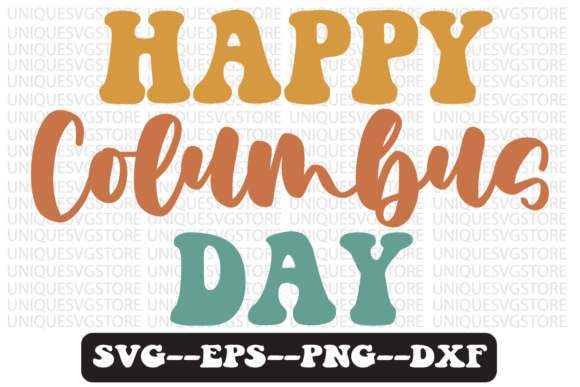
Happy Columbus Day Retro SVG Design
A Designer’s First Look: Nostalgia with a Stitching Caveat
When I opened Happy Columbus Day Retro SVG Design, my first impression wasn’t “vintage charm”—it was “careful curation.” The layout leans into mid-century Americana: bold block lettering, a simplified compass motif, and a subtle banner curl beneath the quote. It feels intentional—not rushed, not overly busy—but it’s clearly built for print, not stitch. As an embroidery designer who’s stitched hundreds of holiday-themed files, I immediately asked: *What happens when this goes under the needle?*
Real-World Use Case: A Boutique Tote Bag Line
Last month, I prepped a small batch of embroidered canvas tote bags for a local gift shop’s October collection—think handmade kitchen towels, baby onesies, and seasonal apparel. I considered Happy Columbus Day Retro SVG Design for a limited-run “Explorer Collection” bag. Why? Its retro shape fits well on the upper left chest or centered across the front panel. But before hooping a single piece of twill, I ran through the essentials.
Where It Shines (and Where It Doesn’t)
- Custom apparel & sweatshirt embroidery: Works best on medium-to-heavy fabrics like cotton-blend hoodies or structured totes—where crisp lines hold up and the design reads clearly at 4–5 inches wide.
- Baby embroidery & onesies: Not ideal. The lettering is too dense and lacks breathing room for tiny garments; fine details risk bleeding or shadowing on lightweight knit.
- Embroidered patch & cap embroidery: Avoid curved surfaces like caps unless you’re using a high-stability backing and reducing density manually. The banner element stretches awkwardly over domed crowns.
- Holiday embroidery & personalized gifts: Strong visual identity makes it memorable for themed gifting—but only if paired with thoughtful thread choices (e.g., navy + cream instead of red + white for subtlety).
- Printable mockups & digital product previews: Excellent here. As a Graphics asset, it renders cleanly in sublimation previews, Etsy thumbnails, and social media banners.
Stitching Reality Check: What the File Doesn’t Tell You
This is a printable SVG—not an embroidery file. That distinction matters. If you’re planning machine embroidery, you’ll need to digitize it first. And that’s where judgment kicks in. The original vector has tight curves, overlapping letters, and thin serifs—all potential trouble spots for satin stitch or fill stitch. Without adjusting spacing and simplifying corners, you’ll get skipped stitches or thread breaks on mid-range machines.
I tested a digitized version on a cotton-linen blend tea towel. With medium-weight cutaway stabilizer and 40-weight polyester thread, the outline held—but the inner “Columbus” text blurred slightly at smaller scales. On dark fabric, contrast faded unless I boosted stitch density by 15% and used matte black thread. That’s not a flaw in the design—it’s just how retro typography behaves under thread.
Fabric & Function: Know Your Limits
Happy Columbus Day Retro SVG Design thrives on stable, low-texture surfaces: denim aprons, canvas pillow covers, unbrushed cotton sweatshirts. It stumbles on:
- Thin or stretchy fabric (like jersey baby onesies)—without heavy stabilizing, lettering distorts.
- Dark or heavily textured backgrounds—fine details disappear without careful thread color selection.
- Products meant for frequent washing (kitchen towels, kids’ clothing)—dense fill areas may pill or stiffen over time unless stitch density is moderated.
Brand Fit & Customer Trust
For craft businesses and Etsy sellers, presentation is everything. This design reads as confident, nostalgic, and hand-crafted—but only if executed well. A poorly digitized or loosely stitched version undermines perceived value. Customers notice when letters look “blobby,” when the compass icon loses definition, or when the banner curls don’t mirror the original vector flow. That’s why I always recommend testing Happy Columbus Day Retro SVG Design on scrap fabric first—and checking it in both black-and-white and color mockups to assess balance.
It also works best when aligned with a cohesive brand voice. If your shop sells vintage-inspired nursery decor or Americana-themed apparel, it slots right in. If you focus on minimalist modern or global cultural themes, it may feel tonally disconnected—no matter how technically sound the stitching.
Practical Designer Notes Before You Start
- Confirm licensing terms before selling finished products or bundling the SVG as part of a digital embroidery kit.
- Test on your most common fabric/stabilizer combo—even if it’s “just a tote bag.” Thread tension shifts unexpectedly on natural fibers.
- Check small details at actual stitch size: zoom in on the compass points and banner ends. If they vanish at 3 inches wide, simplify before digitizing.
- Compare light and dark fabric backgrounds side-by-side. Some retro palettes flatter ivory better than charcoal.
- Use proper stabilizer—especially for woven fabrics with loose weaves. A tear-away alone won’t support those sharp angles.
- Remember: this is a Crafts-category graphic. Its strength lies in adaptability—not out-of-the-box embroidery readiness.
Final Thought: A Solid Starting Point, Not a Standalone Solution
Happy Columbus Day Retro SVG Design isn’t a plug-and-play embroidery file—but it’s a smart, mood-driven foundation. For designers, small shop owners, and creative entrepreneurs, it’s worth the extra digitizing step if your audience responds to warm, historical storytelling. Just go in eyes open: honor its retro soul, respect its limitations, and let craftsmanship—not just the concept—carry the final product.